
IRGC said vessels seeking to sail through the strategically critical Strait of Hormuz must obtain Iran's approval; otherwise, they could become targets of Iranian attacks.

The United States has clarified that its naval blockade in West Asia targets Iranian ports and coastline, not the Strait of Hormuz, applying to all ships regardless of nationality. US officials warned Iran against threatening commercial ships and hinted at ceasefire negotiations as an alternative.

'We are getting used to the constant alerts to take shelter, listening to sonic booms from jets flying above us, hearing news of neighbouring ports being targeted, and being the only ship in the terminal.'

'Even if the war ends tomorrow, which is unlikely, and we go back to the pre-war status quo, the world will still need some time to get over the sudden shock of oil price increases.'
Iran has announced the Strait of Hormuz is open to commercial vessels, coinciding with a ceasefire between Lebanon and Israel.

An Indian-flagged crude oil tanker, Jag Laadki, safely sailed from the UAE's Fujairah port despite an attack on the terminal and is scheduled to reach India. The Indian government is working to ensure the safe passage of remaining Indian-flagged vessels in the region.

US President Donald Trump indicated the possibility of further military operations against Iran's Kharg Island, a key oil export hub, claiming previous strikes had significantly damaged its infrastructure.

Trump also called upon China, France, and Japan, among others, to send ships to the Strait of Hormuz.

Trump has made it clear: the US will not lift its blockade of Iranian ports until a deal is signed.

The tanker reportedly switched off its Automatic Identification System (AIS) transponder while navigating the high-risk stretch of the strait and reappeared on tracking systems on March 9.

Both sides have now revealed a preference for escalation over strategic defeat, and each new provocation narrows the space for the next pause. The Touska seizure, Iran's refusal to negotiate under blockade, Israel's strikes on Iranian oil infrastructure -- all of these add up to an increasingly untenable situation. This makes the wild card -- Trump and his motormouth -- more consequential than ever, notes Prem Panicker in his must read blog on the Iran War.

The United Arab Emirates Ministry of Defence has announced that the air force and air defence forces have successfully intercepted a significant number of aerial threats following a large-scale Iranian attack that commenced on February 28.

24 Indian-flagged vessels with 677 Indian seafarers were currently located west of the Strait of Hormuz, and four vessels with 101 Indian seafarers were stationed east of the strategic waterway.

Iran is fighting a different war: Older, slower, and in some ways more dangerous. Iran doesn't need to shoot down an F/A-18. It only needs to make the Strait of Hormuz feel dangerous long enough for insurance markets, shipping companies, and oil futures traders to do the rest. Prem Panicker continues his must-read daily blog on the war in the Middle East.

The ceasefire is still technically holding, to the extent that no overt hostilities have been reported yet, but the rhetoric has hardened dangerously. The week ahead will also clarify whether the Islamabad failure was a negotiating tactic or whether Washington has genuinely locked itself into a position from which the only exits are climb-down, escalation, or the slow bleed of a new status quo that nobody chose and nobody controls. Prem Panicker continues his must read blog on the Iran War.
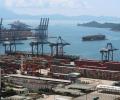
With the Iran war escalating sharply and crisis deepening in the global energy market, India on Monday unveiled a coordinated plan to support exporters and shippers caught in the fallout.

Expanding the scope of hostilities, Zayed Port in Abu Dhabi, United Arab Emirates, was also targeted by missile strikes launched by Iran, according to a report by the Iranian state broadcaster, Press TV.

The vessel sank on March 4, 2026, approximately 20 nautical miles west of Galle, after reportedly being struck by a torpedo from a United States submarine.

Amid escalating tensions, Iranian Deputy Foreign Minister Saeed Khatibzadeh declares Iran's unwavering commitment to a 'heroic nationalist defence' against perceived American and Israeli aggression, vowing to resist what he calls an 'invasion' to the very end.

Fight on toward goals that keep receding, or exit with most objectives unmet. Trump is agitated, his poll numbers falling below the Plimsoll line, his base fractured between those who back the war and those who remember that he campaigned on ending them.

Indian Coast Guard ship Sarthak visited Chabahar port in Iran, marking the first such visit and underscoring India's growing maritime engagement in the region. The visit aims to strengthen institutional linkages and enhance mutual understanding in maritime safety and security.

When everyone has footage and no one can verify it, the loudest voice wins, notes Prem Panicker who begins a daily blog on the War in the Middle East.

Kadhis made from yoghurt have many avatars all over India. It takes on countless forms. Creamy and thick in the north with the addition of besan and malai-wallah dahi. Coconut-rich in the south or the thinner Mor Korumbu. Much sweeter in the west.

The Indian coast guard has rescued six crew members on board an Oman vessel Sakar-7, about 160 nautical miles off Porbandar coast in the Arabian sea.

This would be the second cyclonic storm in the Arabian Sea this year.

India has said it will take all steps to protect its national interests and ensure comprehensive national security in all domains after Pakistan and Saudi Arabia signed a strategic defence pact.

'Countries like Cambodia, Vietnam, Laos, and the Philippines have a 50 per cent increase in bookings.'
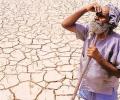
The death toll included over 450 from intense heat wave last summer, according to the World Meteorological Organization.

Cyclone Asna, formed over the coast of Kutch in Gujarat earlier during the day, has moved into the Arabian sea towards Oman without leaving any major impact on the region, officials said on Friday evening.
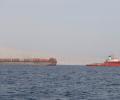
US strikes on Iran's three main nuclear facilities have once again raised concerns that Tehran might shut down the Strait of Hormuz - one of the world's most critical chokepoints, through which a fifth of global oil and gas supply flows.

A boat with three AK-47 rifles and bullets was found off the Raigad coast in Maharashtra on Thursday, officials said adding that there was no security threat.

The decision follows an exploratory drilling campaign that failed to unearth any significant prospects, the Oman Daily Observer report said.
An Indian ship sank off the coast of southern Oman, drowning five Indian sailors and leaving nine others missing.
Reliance Industries Ltd on Saturday acquired exploration rights to one of the largest deep water blocks in the Sultanate of Oman.

Though the "eye of the storm" is away from land, the cyclone's outer periphery would leave its impact on the coast.
After nearly 32 months of being held captive on board the cargo ship MV Iceberg, five Indians sailors released by Somali pirates returned home on Saturday.
The grounded oil tanker drifted from Oman coast to the city's Juhu-Versova beach in July last year.
"We have just kept skeleton staff at the plant and rest have been sent home," Deepak G Inamdar, a senior engineer at the plant had told Gulf News over phone from Sur on Wednesday.

Nine Indian sailors, who were rescued from an ill-fated 'dhow' that sank nearly 90 nautical miles southeast of Al Mukalla coast in Yemen, have safely reached Oman, according to a report.
After a week's delay due to Cyclone Phet, the south-west monsoon finally restarted on its course on Monday, according to the India Meteorological Department.
